



Hidden Passages: The Birth of Lyon’s Traboules
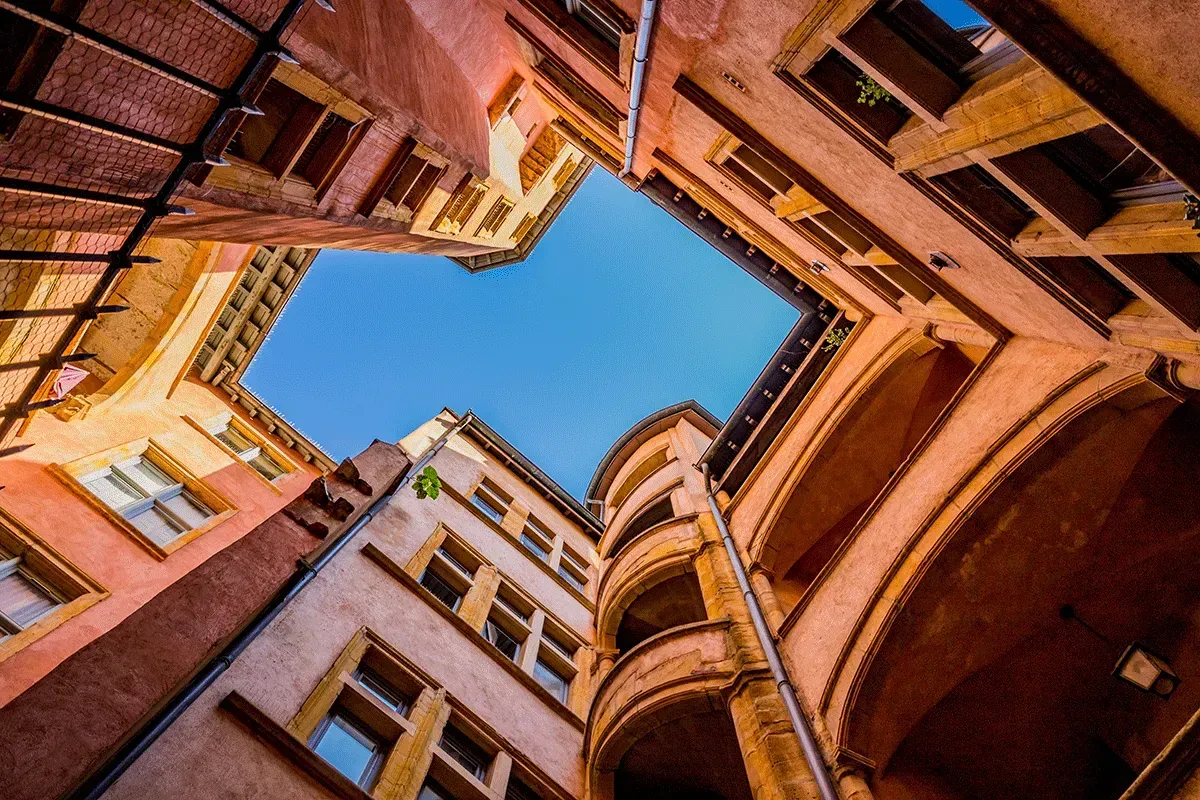
A Network of Hidden Passageways Shaping Lyon’s Urban History
Traboules of Lyon: Origins, History and Hidden Passageways
Introduction
The traboules of Lyon are a unique network of hidden passageways running through buildings and courtyards, especially in Vieux Lyon and Croix-Rousse. These traboules have shaped Lyon’s urban life for centuries, allowing residents to move discreetly across dense neighborhoods. More than architectural curiosities, the traboules of Lyon reveal how the city adapted to trade, climate, and daily life from Antiquity to the Renaissance.
Origins of Lyon’s Hidden Passageways
The word traboule comes from the Latin transambulare, meaning “to pass through.” The earliest passageways appeared as early as the 4th century, when space inside the city was limited. These shortcuts allowed residents to move efficiently between streets without going around entire blocks.
Architectural Evolution
During the Renaissance, these passageways became more elaborate. Many began to include inner courtyards, spiral staircases, and vaulted ceilings. A large number of these Renaissance-era passageways can still be found in Vieux Lyon, reflecting the city’s architectural heritage.
Social and Practical Uses
Beyond convenience, these corridors shaped daily life. They offered shelter from bad weather, enabled discreet movement through the city, and encouraged social interaction. Silk workers, known as canuts, relied on them to transport delicate fabrics safely across neighborhoods.
Preservation and Modern Relevance
Today, around 500 of these passageways still exist in Lyon, with roughly 80 open to the public. They have become a strong symbol of the city’s historical identity and continue to attract visitors interested in architecture and urban history. Ongoing preservation efforts aim to protect this unique heritage.
Conclusion
Lyon’s hidden passageways are more than architectural curiosities. They reveal how the city adapted to space, trade, and daily life over centuries. Some of Lyon’s most interesting traboules are discreet, privately owned, or difficult to interpret without historical context. Experiencing them with local insight allows you to understand not just where they are, but why they matter.
Want to book a private traboules walk in Lyon with a local expert?
Our private walking tour focuses exclusively on the traboules of Vieux Lyon.
Guided access is limited, and not all passageways are publicly accessible.
A licensed local guide ensures a curated route, historical accuracy,
and respectful access.