



When American History Met Lyon Silk
Some moments in guiding stay with you because they reveal something larger than the tour itself.
They begin like any other day: a conversation, a street, a stop inside a historic building. Then, almost without warning, something shifts. A place, an object, and two visitors suddenly align in a way no itinerary could ever have scripted.
That happened to me last week in Lyon.
I was guiding an American couple from Massachusetts.
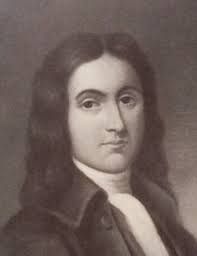
She is a descendant of John Hart. He is a descendant of Benjamin Franklin.
That fact alone is extraordinary. Both men were signers of the Declaration of Independence in 1776 — two names embedded deep in the symbolic foundations of American history. But what made the moment truly remarkable was not the genealogy alone. It was the setting in which that genealogy suddenly came alive.
A founding scene, woven in silk
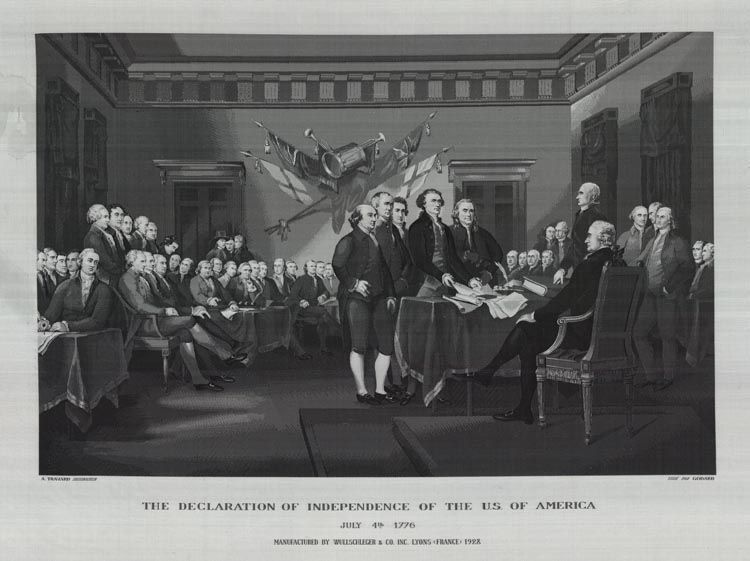
During the visit, we stopped at Brochier, one of Lyon's historic silk houses — a place that still carries the memory of the city's textile past. Among its collection is an object unlike any other: a Jacquard-woven silk rendition of John Trumbull's famous painting of the signing of the Declaration of Independence.
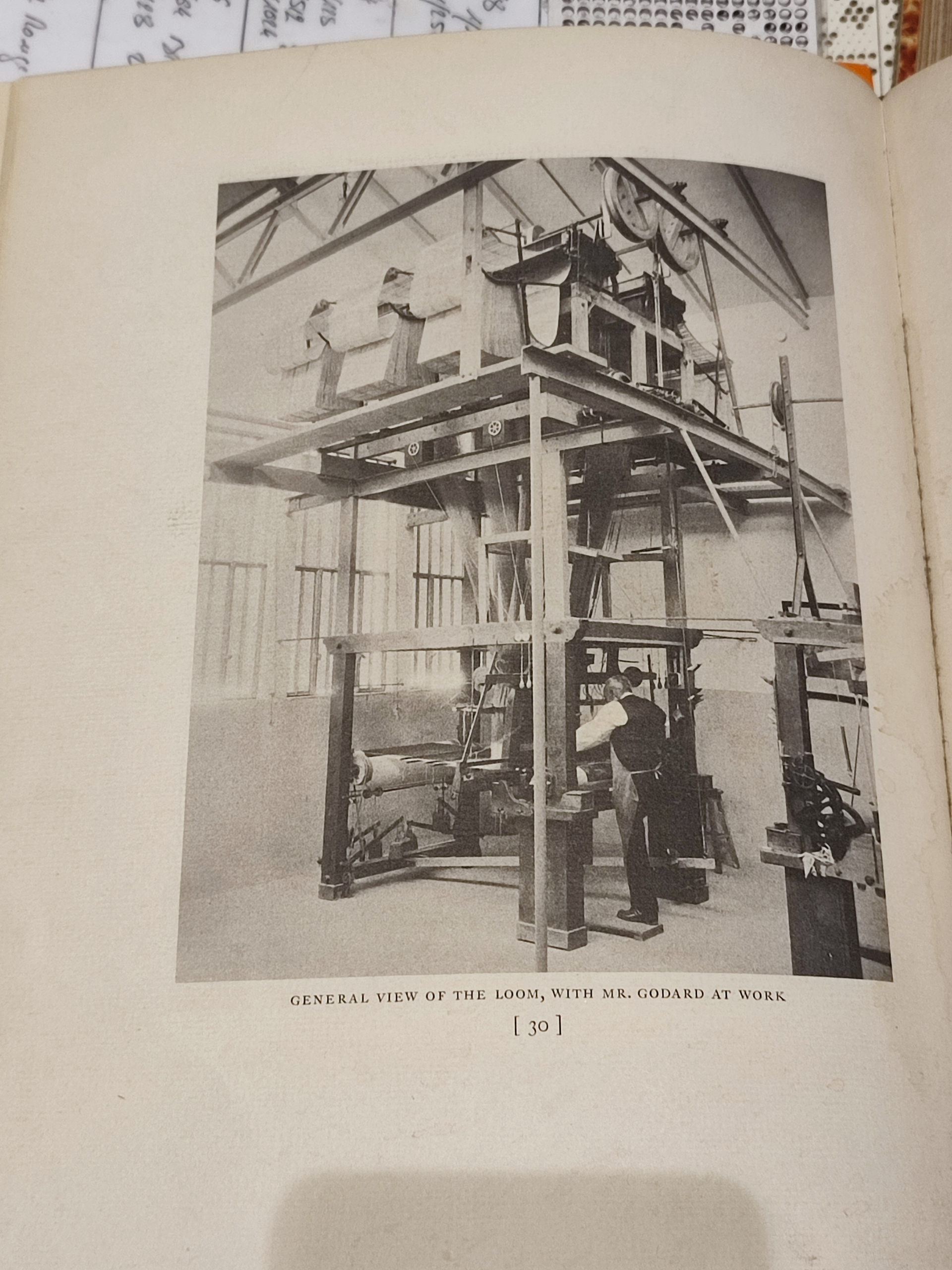
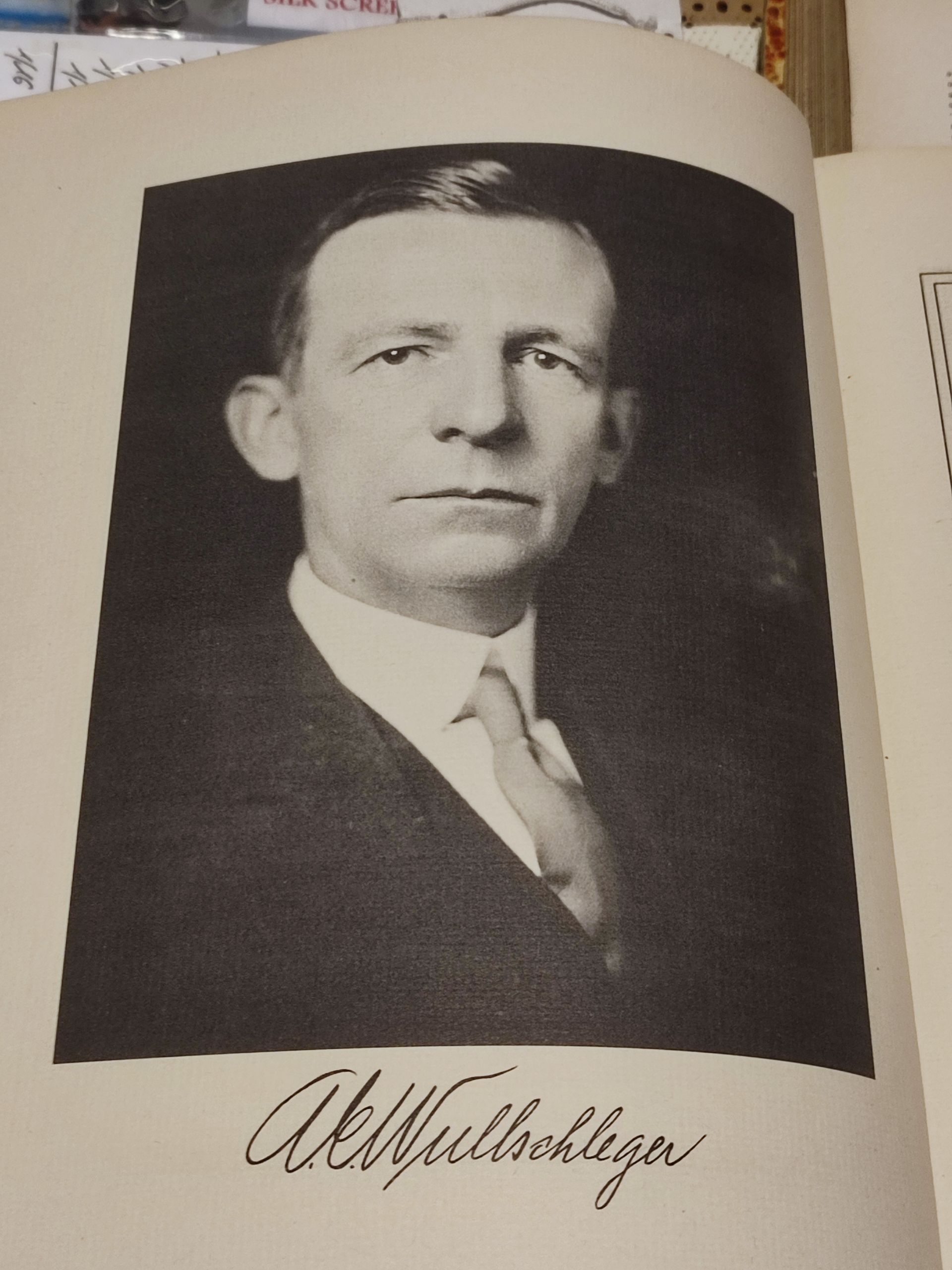
This was not a decorative reproduction. It was one of the most ambitious Jacquard undertakings of its time. In 1925, A.E. Wullschleger — a Swiss textile entrepreneur with offices in New York and Lyon — commissioned the piece to mark his firm's twentieth anniversary and as a tribute in silk to the silk industry itself. The project required the construction of a dedicated building, six Verdol Jacquard mechanisms, tens of thousands of punched cards to encode the image, and three continuous years of work before it was completed in 1928. Only 500 were ever produced, as gifts for colleagues in the silk trade and for every American embassy in the world. One example and the original loom are held by the Smithsonian in Washington, DC. Another, according to the Brochier silk house, hangs in the White House.
In other words, the memory of American independence had not simply been illustrated in Lyon. It had been engineered, programmed, and woven there — thread by thread, card by card, over a thousand days. The original making-of book, preserved at Brochier Soieries, documents the scale of the undertaking: a dedicated building constructed around the loom, multiple Verdol Jacquard mechanisms rising two storeys high, and Mr. Godard working at the base of a machine so large it required a second operator on an upper platform to feed the punched cards. This was not a commemorative textile. It was a feat of engineering, patience, and mechanical code.
And there they were.
The descendants of two signers of the Declaration of Independence, standing inside a Lyon silk house, looking at a silk portrait of the very scene in which their ancestors appeared. Their forebears had not just been remembered there. They had been woven into Lyon.
At that moment, the visit changed its nature.
It was no longer simply an interesting anecdote or a cultural coincidence. It became a rare historical alignment — several layers folding into one another at once: family memory, political symbolism, transatlantic trade, industrial ambition, and place. Two American lineages. A Swiss entrepreneur. A French craft tradition reaching back to the sixteenth century. A single object holding all of it together.
For a few minutes, history stopped behaving like a timeline. The centuries no longer felt arranged in sequence. They seemed folded together, like layers of silk resting upon one another.
Why moments like this matter
As a guide, I often explain places, connect dates, and offer context. That is part of the work, and it matters. But on rare occasions, the work becomes something more intimate. You are no longer simply transmitting history. You are witnessing the moment when history recognizes itself.
That is what happened here.
It reminded me that heritage does not survive only through monuments, museum labels, and official narratives. It also survives through trade routes, family memory, objects, craft traditions, and unexpected encounters between people and places.
In a city like Lyon, those threads are everywhere. Most of the time they remain invisible. And then, once in a while, they suddenly come together.
Not as spectacle. Not as sentimentality.
But as a brief and unmistakable charge in the air — when the past stops feeling distant and stands directly in front of you.
A different way to experience Lyon
This is why I believe a private tour can be much more than information delivered while walking from one landmark to another.
At its best, it creates the conditions for recognition. A city opens differently when the story is not reduced to dates and façades but connected to memory, identity, and lived experience. A silk house, a family name, a woven portrait of a founding moment — and suddenly Lyon is no longer just being visited. It becomes part of a wider human map.
That day, inside a historic silk house, with two visitors from Massachusetts, that map lit up.