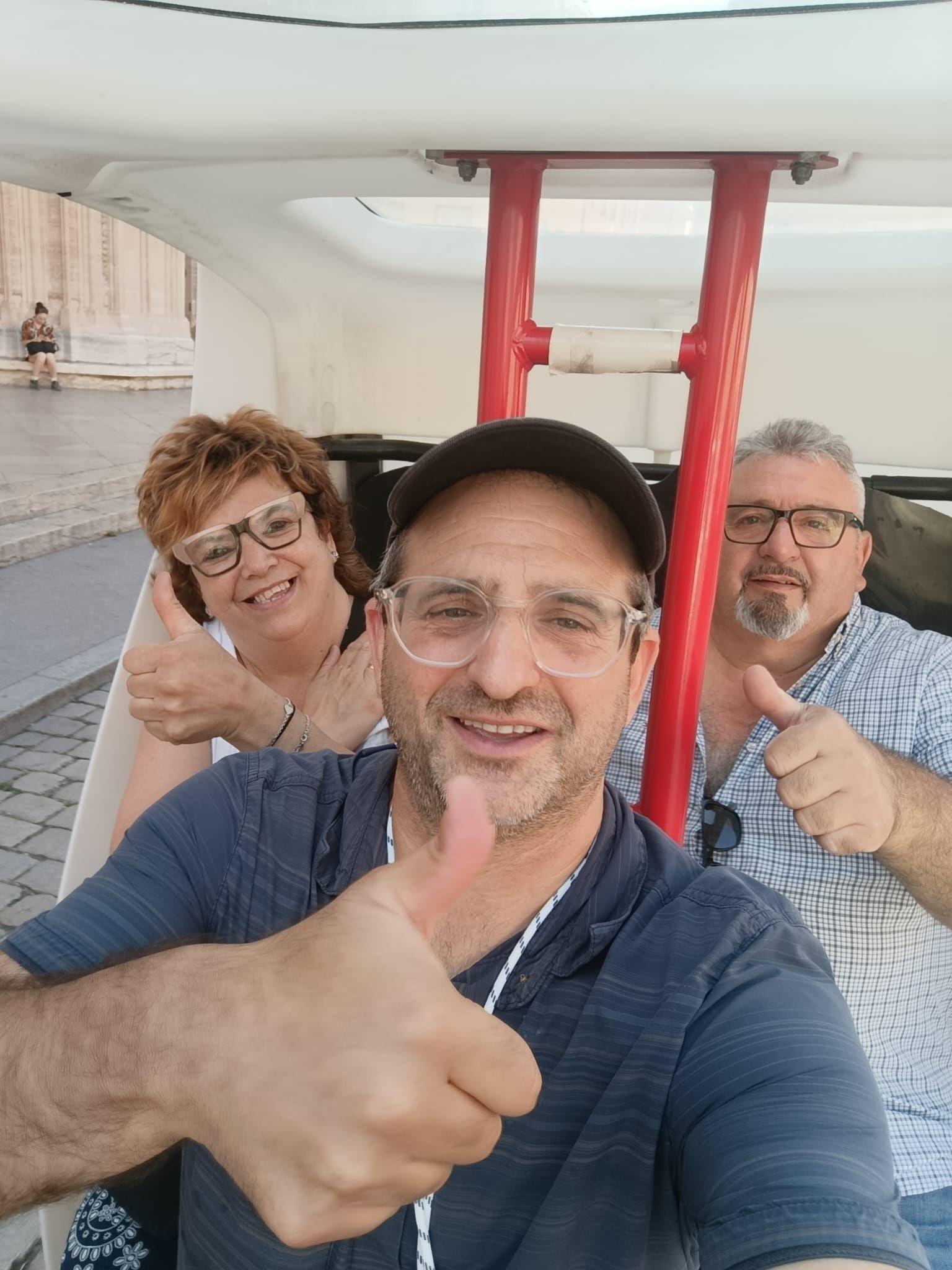
Every Door Opens onto a Different Lyon
Every traboule begins with a door.
From the street, it may look completely ordinary. Once opened, however, it can reveal a Renaissance courtyard, a spiral staircase, an old route used by silk workers or an unexpected passage between two streets.
No two traboules lead to exactly the same place.
A private traboules tour in Lyon works in much the same way. The historical route is prepared, but the experience changes according to the people taking part. Every visitor arrives with different interests, professions, languages, memories and questions.
Each of these can open another door into the city.
For me, personalization does not simply mean choosing between several fixed itineraries. It means listening, noticing connections and allowing the tour to develop naturally without losing its historical foundations.
The traboules provide the structure.
The people walking through them determine what they reveal.
Exploring hidden traboules with Karen Brown and her family
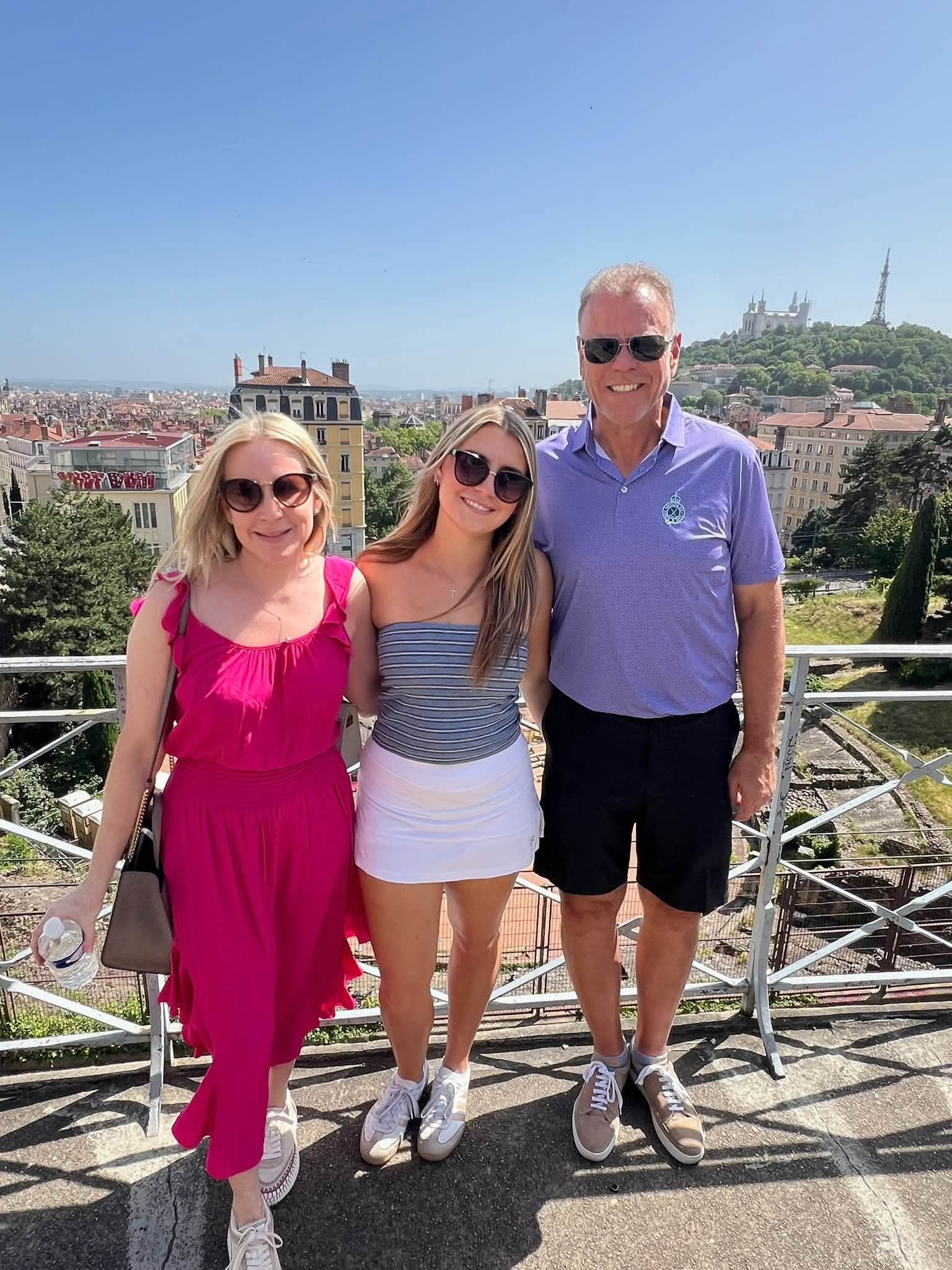
During a recent private traboules tour, I had the pleasure of showing Lyon to American television journalist Karen Brown, a former CBS News correspondent and anchor, and her family, visiting from Texas.
Together, we explored one of Lyon’s most discreet and little-known traboules.
Its entrance gives almost nothing away. From outside, there is no grand monument or spectacular sign announcing what lies behind the door. This is part of the fascination of Lyon’s traboules. An apparently ordinary façade can suddenly open onto a passage, a courtyard and a fragment of the city that most visitors would never notice alone.
But the physical doors were only the beginning of the visit.
Karen and I soon discovered that we shared professional experience in television. Our conversation moved naturally towards journalism, communication and the way stories are constructed and transmitted.
With her husband, music became another immediate point of connection. With their daughter, part of the tour developed into an opportunity to practise French in a relaxed, real-life setting.
None of these conversations took us away from the traboules.
They created different ways of entering their history.
Television opened questions about how cities tell their own stories. Music led towards culture and memory. Speaking French allowed their daughter to participate actively in the discovery of Lyon rather than simply listening to a conventional explanation.
Meanwhile, the traboules remained the architectural thread connecting everything: hidden entrances, Renaissance galleries, the silk trade, Italian merchants, banking and the unusual relationship between private buildings and public circulation.
Karen later wrote:
“Our amazing walking tour of Lyon! It was once the silk capital of Europe and the banking capital of France. It’s so gorgeous and fascinating. And Didac did such a good job showing us his city!”
She also described it as an “awesome tour” and added:
“We loved it!”
What pleased me most was that each member of the family had found a personal point of entry into Lyon while remaining part of the same shared experience.
Lyon’s traboules are more than secret passageways
The traboules of Lyon are often described simply as secret passageways.
It is an attractive expression, but it only tells part of the story.
Behind their doors, visitors can discover vaulted corridors, wells, galleries, staircases and courtyards influenced by Renaissance architecture. Some traboules provided practical shortcuts through densely built neighbourhoods. Others were closely connected to the silk trade and the movement of workers and materials through the slopes of Croix-Rousse.
Many of Lyon’s traboules remain inside residential buildings where people still live.
They are not isolated museum exhibits. They belong to a living city.
This makes visiting them particularly interesting, but it also requires knowledge, discretion and flexibility. Access can change. A door may be closed because of maintenance, residents or local conditions. An itinerary that worked yesterday may need to be adjusted today.
A private traboules tour should therefore have a clear historical structure without becoming mechanically attached to a fixed list of entrances.
Preparation matters, but so does the ability to respond to what is actually happening in the city.
Personalization happens during the tour
Personalization is sometimes presented as a menu selected before the visit begins.
Architecture, gastronomy, silk or the French Resistance: choose one box.
In reality, people rarely fit into a single category.
A family may contain several interests at once. One person may want historical depth, another may be interested in music, while someone else wants to practise French or receive local restaurant recommendations.
A genuinely private tour needs to hold these interests together.
This does not mean filling the visit with unrelated anecdotes. It means recognizing connections that already exist within Lyon.
A question about an ordinary doorway can lead towards Renaissance architecture. A courtyard can open a discussion about Italian bankers and merchants. The history of the silk workers can lead towards craftsmanship, social movements or the cultural identity of Croix-Rousse.
Personalization is not only deciding which doors to open before the tour begins.
It is recognizing which doors are opening during the visit.
From a Croix-Rousse traboule to the turntables
One of the most revealing examples comes from Croix-Rousse.
A traboule there leads from the historical world of the canuts and silk workers towards a street known for its independent record shops. The transition may initially seem surprising, but it is entirely natural.
The passage connects two forms of living culture.
On one side, there is the history of silk, manual skill, social organization and transmission between generations. On the other, there is vinyl, music, collecting and the contemporary cultural life of the neighbourhood.
During a private music-and-wine tour with a young couple from Denver, this connection became especially meaningful.
He was a musician and DJ. She was a passionate music lover.
Inside one of the record shops, he did not simply browse the shelves. He eventually found himself behind the turntables, headphones on, selecting and playing records.
At that moment, the shop stopped being another location on an itinerary.
It became a place of participation.
The traboule had carried us from the history of Lyon’s silk workers towards its living musical culture. From craftsmanship to sound. From historical memory to contemporary practice.
The visitor was no longer standing outside the subject, listening to someone explain it.
He had entered it.
From the traboules of Rue Mercière to Lyon’s bouchons
The traboules around Rue Mercière open onto another version of Lyon.
Here, architecture, commerce and gastronomy meet.
After walking through hidden passages and courtyards, visitors can emerge close to streets filled with restaurants and traditional bouchons. The movement is physical, but also historical and cultural.
A traboule becomes a transition between exploring the city and tasting it.
The conversation can move naturally from merchants and urban development towards Lyonnaise cuisine, local products and the social atmosphere of the bouchon.
Some visitors are primarily interested in architecture. Others arrive in Lyon because of its reputation for food. Many want to understand both.
The traboules allow these subjects to remain connected rather than appearing as separate chapters from a guidebook.
One door leads to a courtyard.
Another leads towards a table.
Different visitors reveal different versions of Lyon
The same principle applies beyond walking tours.
During a bicycle tour with a Catalan couple from Camprodon, the city was discovered through movement, geography and shared cultural references.
Cycling changes the scale of Lyon. Distances become easier to understand. The relationship between the rivers, hills and neighbourhoods becomes more visible.
The conversation also changes when guide and visitors share a language and certain cultural points of reference. A new city can be compared with familiar places without reducing one to the other.
Visitors never arrive empty-handed.
They bring their own geography, experiences and memories. A guide can ignore those elements, or use them as bridges towards a deeper understanding of the city.
When one visit becomes three
Some connections continue after the first tour.
A couple from Florida came to Lyon for a month to study French. During their stay, they booked three different tours with me.
Each visit opened another part of Lyon, but it also allowed our conversations to continue. There was no need to begin again from zero. We could build on what had already been shared, return to previous subjects and explore new ones.
Later, we met again simply to have a glass of wine.
There was no itinerary. It was no longer a professional appointment between guide and clients. We were meeting as new friends.
This cannot be manufactured or included as a promise in a tour description. Human connection does not come with a booking confirmation.
But it reveals something about private guiding.
When the exchange is genuine, the relationship with the city does not necessarily end at the final stop. One conversation can lead to another tour. A recommendation can become a new discovery. Visitors can gradually stop feeling like spectators and begin to experience Lyon as a place in which they have created their own memories.
A private traboules tour needs knowledge and freedom
Historical knowledge remains essential.
The history of Lyon’s traboules cannot be reduced to improvisation or storytelling detached from evidence. Dates, architecture, urban development and social context provide the foundations of the visit.
But knowledge should create freedom, not rigidity.
After thousands of tours in Lyon, I know the routes, the principal monuments and the historical framework. I also know that repeating exactly the same performance for every group would flatten the city.
A serious private guide must be able to move between preparation and spontaneity.
The route needs direction, but it should remain alive.
A closed entrance may reveal another passage. A question may uncover an unexpected subject. An encounter inside a shop may become more memorable than a planned stop.
Spontaneity does not mean abandoning the tour.
It means having enough experience to follow a new direction without losing the thread.
More than delivering information
Facts matter, but facts alone do not always create understanding.
A tour becomes memorable when knowledge begins to circulate between the city, the guide and the people walking through it.
A visitor asks a question. The answer connects with a profession, a passion, a language or a memory. That connection reveals another layer of the traboules and another part of Lyon.
The role of the guide is not simply to speak.
It is to listen, identify connections and understand when an unexpected direction can enrich the experience.
Sometimes the connection leads towards television.
Sometimes towards music, French conversation, cycling, wine or a bouchon.
The traboules make a particularly powerful starting point because connection is already built into their architecture. They link streets, buildings, neighbourhoods and different levels of the city.
They also connect different periods of Lyon’s history.
A private tour can do the same between the city and the people discovering it.
Every door tells a different story
Every traboule opens onto a different Lyon.
One door may lead to Renaissance architecture. Another to the silk trade, a hidden courtyard, an independent record shop or the bouchons of Rue Mercière.
Visitors also bring doors of their own.
A family from Texas brought television, music and language into the visit. A young couple from Denver connected the history of Croix-Rousse with vinyl and DJ culture. Visitors from Camprodon discovered Lyon through cycling and shared Catalan references. A couple from Florida transformed three tours into a longer relationship with the city.
No two traboules tell exactly the same story.
No two groups reveal exactly the same Lyon.
The itinerary provides direction. Historical knowledge gives it depth. But the experience begins to become personal when the right doors open.